
El Niño Is Strengthening: Is Your Construction Site Ready for Fall and Winter Weather?
El Niño Is Strengthening: Is Your Construction Site Ready for Fall and Winter Weather?
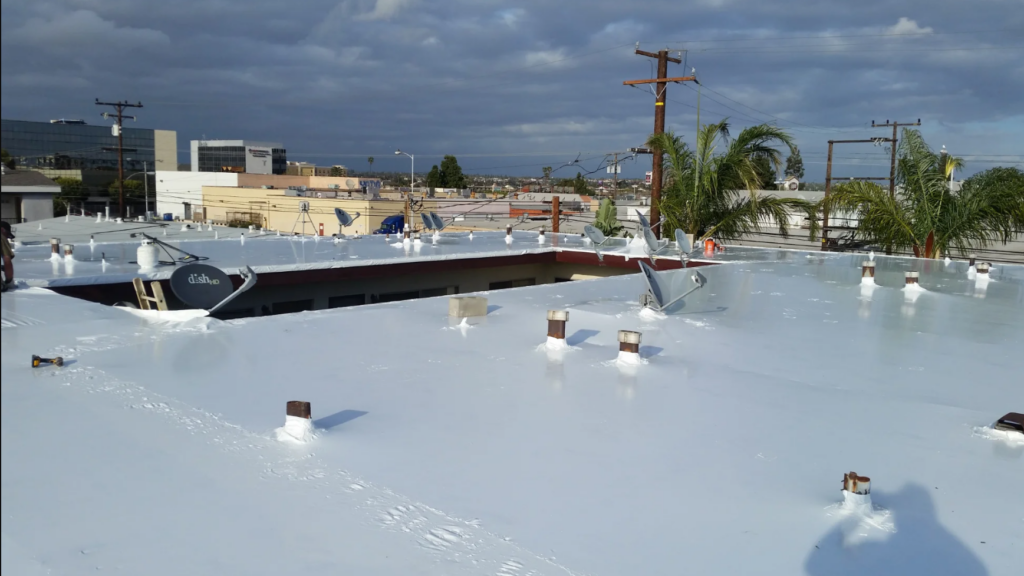
Southern California contractors have good reason to look closely at weather exposure this fall.
That does not mean every construction site will experience unusually heavy rain, or that every storm can be predicted months in advance.
But for contractors managing construction sites with unfinished roofing, open exterior walls, exposed materials, or equipment that cannot easily be moved, the strengthening El Niño makes weather protection worth reassessing before the wetter months arrive.
What Does a Stronger El Niño Mean for Construction Planning?
El Niño describes a large-scale ocean and atmosphere pattern in the tropical Pacific that can influence seasonal weather.
In its October 8, 2026 update, NOAA’s Climate Prediction Center reported that El Niño continued to strengthen, with a strong-to-very-strong event likely through early 2027. NOAA’s September 17 seasonal outlook also favored above-normal precipitation across Southern California from October through December.
That still does not guarantee that a particular city, project, or week will receive heavy rain.
That distinction matters.
Contractors should not make project decisions based on the assumption that every El Niño produces the same local conditions. But seasonal outlooks can still be useful for identifying periods when weather deserves more attention in project planning.
For an active jobsite, that makes now an appropriate time to ask a practical question:
What portions of this project would be vulnerable if rain arrived before the permanent building envelope was complete?
Start With the Openings in the Structure
Rain exposure often begins with the parts of the building that are not finished yet.
A roof may be partially installed.
Exterior walls may still have large openings.
Windows or doors may not be in place.
A renovation may involve sections of an existing building that have been opened for construction.
Framing or interior areas that were protected during an earlier phase may become vulnerable as work progresses.
Those conditions do not automatically mean a project needs a temporary shrink-wrap enclosure.
But they do identify where the project team should focus first.
For appropriate projects, a temporary roof, wall, or larger enclosure can help protect exposed areas while permanent work continues.
Reassess the Site as Construction Changes
Construction sites change constantly.
That is why a weather-protection plan based on what the site looked like several weeks ago may no longer fit.
A building that had only one exposed elevation may now have several.
Scaffolding may have been added.
Roof work may have moved into another section.
Mechanical equipment or finish materials may have arrived.
Temporary openings may have changed location.
As Southern California moves toward the wetter months, contractors should evaluate the site as it exists now, not as it looked when the original schedule was created.
At Shrink Wrap Pros, we design temporary protection around the current project conditions, including the size and shape of exposed areas, the expected duration, and the work that still needs to happen nearby.
Pay Particular Attention to Roof Exposure
An unfinished or temporarily open roof can create one of the most significant weather vulnerabilities on an active construction project.
Even when permanent roofing is scheduled, the sequence of construction may leave portions of the structure open for a period of time.
Weather delays, inspections, material availability, or other schedule changes can extend that period.
For appropriate applications, shrink-wrap film can be installed over a suitable supporting system and heat-sealed to create a tight temporary roof or enclosure around the exposed area.
The purpose is not to replace permanent roofing.
It is to help protect the exposed area during the period before the permanent roofing system is ready.
Prioritize What Cannot Be Moved Quickly
Not every exposed item on a jobsite requires the same response.
Some materials can be relocated indoors or moved to a more protected area as weather approaches. Large equipment, prefabricated assemblies, mechanical components, or other items that cannot be moved easily may require more advance attention.
Contractors should identify those items now rather than waiting until a storm is in the short-range forecast.
The goal is not to enclose everything. It is to know which assets would be difficult to relocate or protect quickly if site conditions changed.
Look at Where Water Could Enter, Not Just Where Rain Could Fall
A jobsite can be vulnerable even when the most obvious exposed area is not directly overhead.
Wind-driven rain can reach wall openings.
Water can move through unfinished transitions.
An open elevation can expose interior work.
Temporary roof protection may address one exposure while another side of the structure remains open.
For that reason, project teams should evaluate the building as a system rather than focusing only on the largest visible opening.
That does not mean temporary shrink wrap should be used everywhere.
It means protection should be designed around the actual exposure points that matter to the project.
Check Whether Existing Temporary Protection Still Fits the Site
Some projects may already have temporary coverings, scaffold wrap, or protected work areas in place.
Those systems should be reviewed as the site changes.
New openings may have been created. Scaffolding may have been extended or reconfigured. Access points may have moved. Additional equipment or materials may now be exposed. Where scaffolding supports an enclosure or wrap, the system should also remain appropriate for the added loads and anticipated wind conditions.
A temporary protection system that matched the jobsite several weeks ago may no longer cover the areas that are exposed today.
Before wetter conditions develop, contractors should confirm that existing protection still matches the areas that actually need to be covered and the work that still needs to continue.
El Niño Is a Reason to Prepare, Not a Reason to Panic
A strong seasonal outlook should lead to better preparation, not exaggerated predictions.
NOAA emphasizes that even a very strong El Niño does not guarantee a particular local impact. Seasonal outlooks describe probabilities across broader areas and longer periods; they do not predict the timing or severity of a storm at an individual construction site.
For contractors, the practical value of the outlook is that it provides a reason to reassess weather exposure now and then continue following shorter-range forecasts as the season develops.
Get the Jobsite Ready Before the Weather Decides the Schedule
For Southern California contractors, the goal is to identify weather-related vulnerabilities while there is still time to address them.
By the time a specific storm appears in the short-range forecast, the more useful question should already be answered: which portions of the site need temporary protection, and what form should that protection take?
At Shrink Wrap Pros, we work with general contractors, construction managers, scaffolding companies, property teams, and other stakeholders on temporary protection for larger construction projects.
If your project will have unfinished roofing, open walls, exposed materials, scaffolding, or other vulnerable areas this fall and winter, contact Shrink Wrap Pros while there is still time to evaluate the site and coordinate temporary protection. We can review the site conditions, timeline, exposure points, and work still underway to determine what type of temporary protection may be appropriate.
Disclaimer: This article is for general informational purposes only. Seasonal outlooks do not predict conditions at a specific construction site. Temporary protection needs vary based on site conditions, project sequencing, access requirements, and the work being performed.