How to Protect Government-Contract Equipment for Transport
How to Protect Government-Contract Equipment for Transport
Shipping equipment under a government contract requires more than meeting the carrier’s pickup deadline. Before freight leaves the yard, the equipment must be properly staged, protected from anticipated exposure, and accessible for any required inspection.
For government vendors, defense and aerospace contractors, and the logistics teams supporting them, poor coverage or limited access can lead to last-minute rework, pickup delays, or concerns about the equipment’s condition at delivery.
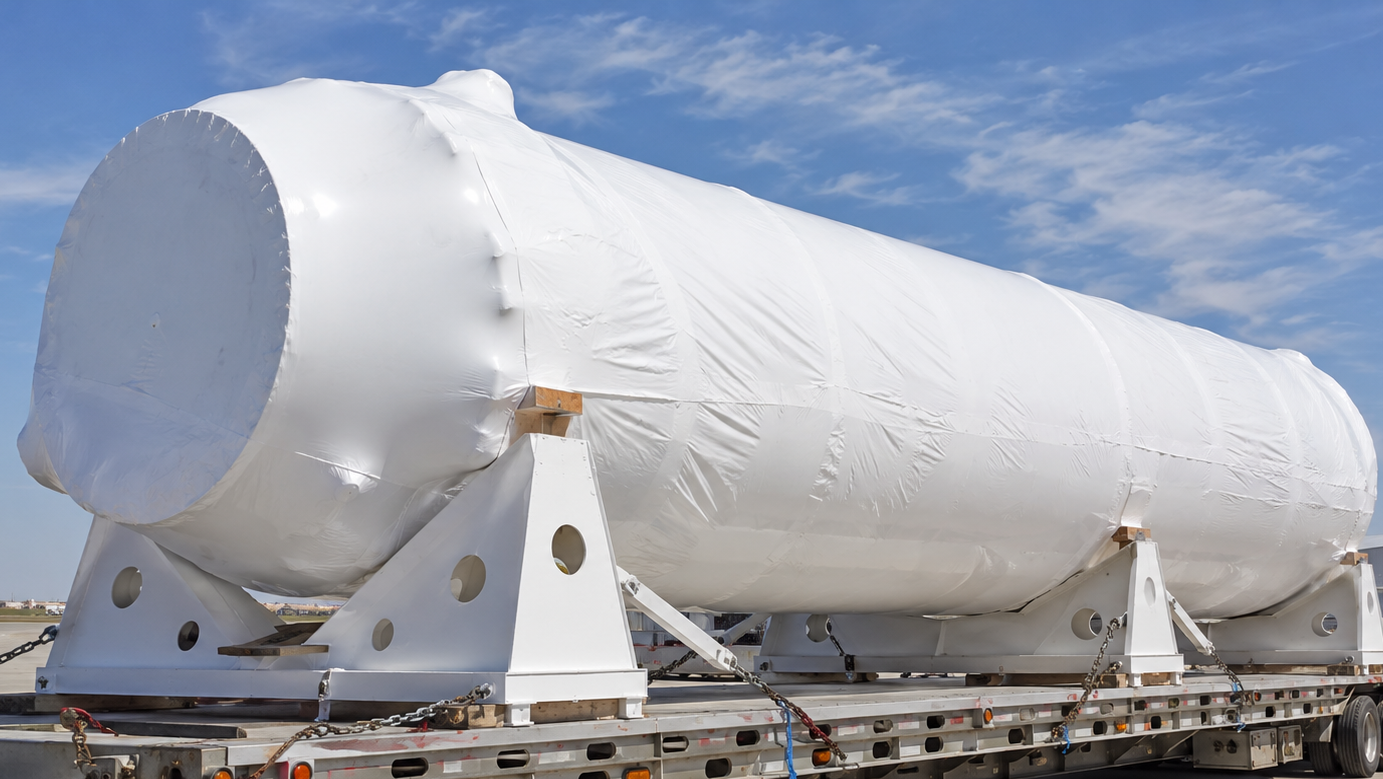
Shrink Wrap Pros provides on-site industrial shrink wrapping for machinery, aerospace components, defense-related equipment, oversized freight, and other high-value assets. A professionally installed shrink-wrap enclosure can provide fitted exterior protection during staging, storage, and transportation.
Start With the Contract and Shipping Requirements
Government contracts may include specific requirements for packing, marking, protecting, and shipping equipment. Those requirements can vary based on the agency, asset, destination, transportation method, and anticipated storage conditions.
Before selecting a protective covering, the responsible contractor should confirm what the contract and carrier require. Labels, serial plates, inspection areas, lifting points, tie-down locations, lights, or placards may need to remain visible and accessible after the equipment is wrapped.
Industrial shrink wrap can support the freight-protection plan, but it does not replace required crating, cushioning, blocking, bracing, load securement, or separate corrosion-control measures.
Planning the enclosure before the equipment reaches its final pickup position can help avoid unnecessary cutting, unwrapping, or reinstallation when the carrier arrives.
How Shrink Wrap Can Support PHS&T Planning
Packaging, Handling, Storage, and Transportation, commonly referred to as PHS&T, is an established discipline in the defense and aerospace sectors. It addresses how equipment is protected and managed during storage, handling, movement, and other stages of its lifecycle.
Industrial shrink wrapping can support certain PHS&T objectives by providing a custom-fitted exterior enclosure during staging, storage, and transportation. The installation can be planned around the equipment’s shape, anticipated exposure, inspection needs, handling points, and transportation schedule.
Shrink wrap is one part of a broader PHS&T strategy. The contractor or responsible logistics team should determine the complete preservation, packaging, securement, and transportation requirements for the asset.
What Should Be Confirmed Before the Equipment Is Wrapped?
Before scheduling an on-site installation, the project team should confirm:
- Expected exposure: Will the equipment remain outdoors or face rain, sunlight, humidity, dust, salt-laden air, debris, or pests?
- Required access: Which labels, serial plates, inspection points, panels, or controls must remain visible or reachable?
- Handling and securement: Where are the lifting eyes, forklift pockets, and tie-down locations that the enclosure must not obstruct?
- Equipment-specific needs: Are padding, reinforced areas, ventilation, drainage, zipper doors, or inspection openings needed?
- Additional preservation measures: Does the equipment require desiccants, protective coatings, corrosion-control materials, or another preservation method in addition to the wrap?
- Film requirements: Does the contract or project call for opaque, UV-resistant, fire-retardant, or another purpose-specific film?
These questions are particularly important when preparing military equipment, aerospace components, heavy machinery, fabricated assemblies, or oversized freight.
Protection May Be Needed Before the Carrier Arrives
Equipment does not have to be moving to face damaging conditions.
Government-contract freight may remain outdoors while awaiting inspection, final documentation, carrier assignment, or pickup. During that time, weather, sunlight, dust, salt-laden air, pests, and activity elsewhere in the yard may affect the asset.
Transportation can add highway airflow, road spray, changing weather, and debris. The protection plan should therefore account for the full period of exposure, including the time before the equipment leaves the yard.
Why Loose Covers May Not Be Appropriate for Every Load
Tarps and reusable covers can be practical for some shipments, particularly when the equipment has a simple shape and the exposure period will be brief.
They may be less suitable for oversized, irregularly shaped, sensitive, or high-value equipment. A loose cover can shift, flap, sag, collect water, or leave openings around projections. Repeated movement may also cause the material to rub against painted finishes, panels, edges, or vulnerable components.
Industrial shrink film is fitted around the equipment and carefully heated so that it contracts into a tight, form-fitting enclosure. Proper padding and reinforcement help the film fit securely around edges, projections, and irregular shapes while reducing loose exterior material.
The enclosure should still be planned around tie-down locations, lifting points, labels, lights, placards, and other features that must remain accessible.
How Can Industrial Shrink Wrap Be Adapted to the Shipment?
A professional shrink-wrap enclosure can be built around the size, shape, access needs, and anticipated exposure of the equipment.
Depending on the project, the installation may include reinforced areas, vents, zipper doors, inspection openings, or removable access sections. Opaque, UV-resistant, fire-retardant, and other purpose-specific films may also be available when appropriate for the application.
Opaque film can reduce casual visibility, but it does not replace required security or chain-of-custody procedures. Fire-retardant film does not make the enclosure fireproof.
Shrink wrap can also help limit direct exposure to rain, road spray, dust, salt-laden air, and other contaminants. It does not prevent corrosion on its own. Sensitive equipment may also require desiccants, coatings, corrosion-control materials, ventilation, or other preservation measures specified for the asset.
Schedule On-Site Shrink Wrapping Before Pickup
Freight protection should not be treated as a last-minute task. The installer may need time to evaluate the equipment, confirm dimensions, identify inspection and securement points, select the appropriate film, and plan any required access or ventilation features.
Shrink Wrap Pros provides mobile shrink-wrapping services for aerospace, defense, transportation, construction, industrial, and commercial projects across the United States. Our team can install the enclosure where the equipment is already staged, reducing the need to move a large or sensitive asset solely for wrapping.
When equipment is oversized, irregularly shaped, sensitive, or exposed outdoors, planning the enclosure before pickup can help prevent unnecessary exposure and last-minute changes.
If your team is preparing equipment for a government contract, defense-related shipment, or other high-value freight move, contact Shrink Wrap Pros to request a quote or schedule an on-site assessment.
Disclaimer: This blog provides general information only. Contract requirements, carrier rules, and project conditions vary. The responsible contractor should review the applicable requirements and obtain any necessary professional guidance. Contact Shrink Wrap Pros for a project-specific assessment. Shrink Wrap Pros is a mobile shrink-wrap company based in Thousand Oaks, California.