
Planning for Fall Rain: When Should Contractors Add Temporary Construction Protection?
Planning for Fall Rain: When Should Contractors Add Temporary Construction Protection?
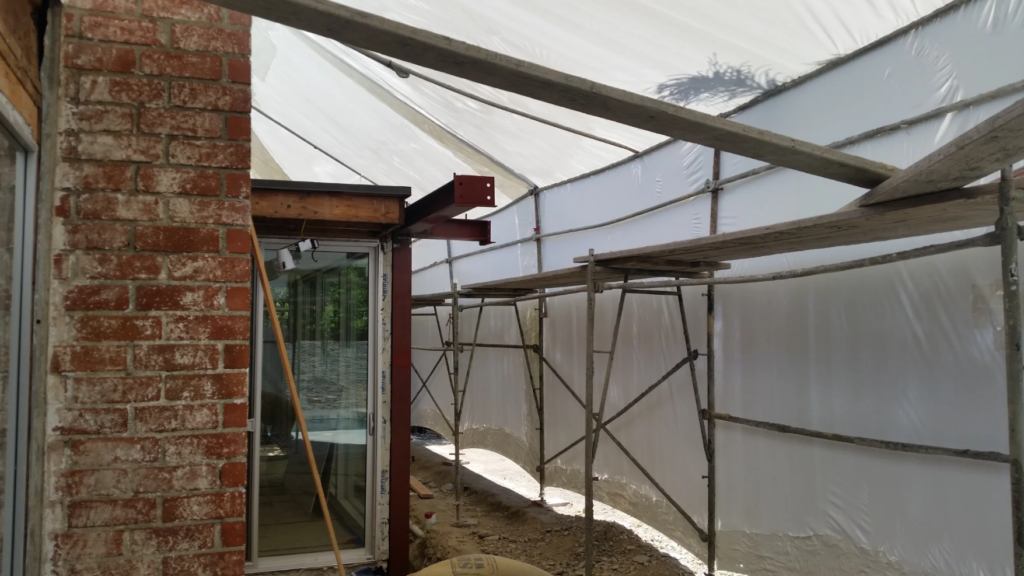
A temporary roof or enclosure is usually easier to plan before the weather becomes the reason you need one.
For contractors working in Southern California, long stretches of dry weather can make temporary protection feel like something that can wait. But once a project reaches a stage where roofing, exterior walls, framing, materials, or equipment are exposed, the timing question becomes more important.
If rain arrives before the building envelope is complete, the challenge is no longer simply deciding whether protection would be useful. The project team may be trying to solve that problem while also managing schedules, subcontractors, inspections, deliveries, and changing site conditions.
That is why temporary construction protection is often most effective when it is considered before an urgent weather event forces the decision.
When Should Temporary Protection Enter the Project Plan?
There is no single point in a construction schedule when every project should add temporary protection.
The better question is when the project will reach a stage where weather could create a real problem.
For one job, that may be when demolition opens part of an existing structure. For another, it may be when framing is complete but permanent roofing or exterior finishes are still weeks away. A renovation may have interior work underway while part of the building remains temporarily open. Equipment or materials may also arrive before the area where they will be installed or stored is fully enclosed.
Those transition points are worth identifying early.
A project does not necessarily need an enclosure simply because fall is approaching. But once the schedule shows that vulnerable areas could remain exposed during a period of changing weather, it makes sense to evaluate the options before conditions become urgent.
Look at the Schedule, Not Just the Forecast
One of the easiest mistakes to make is waiting for rain to appear in the short-term forecast.
Construction planning operates on a longer timeline.
A clear week does not tell you whether the roof will be finished a month from now. It does not account for a delayed inspection, a delivery date that changes, a subcontractor schedule that shifts, or another phase of work that takes longer than expected.
Temporary protection planning should therefore begin with the construction schedule.
Project teams should ask:
- When will the structure become exposed?
- How long is that condition expected to last?
- What work is scheduled before permanent roofing or exterior protection is complete?
- Could a delay extend that exposure?
- What materials, equipment, or finished areas could be affected if weather arrives sooner than expected?
Those questions provide a better planning foundation than relying on today’s forecast.
Identify the Areas That Would Be Hardest to Protect at the Last Minute
Not every exposed part of a project creates the same challenge.
A relatively small opening may be straightforward to address. A large roof area, multi-story elevation, scaffolded exterior, irregular structure, or area containing equipment may require more planning.
That matters because temporary construction protection is rarely as simple as covering an exposed area.
The project may require measurements, attachment planning, coordination with scaffolding or other site systems, access points, and decisions about how the enclosure will interact with work still underway. Where scaffolding will support an enclosure, its suitability for the added loads and anticipated wind conditions also needs to be considered.
At Shrink Wrap Pros, we look at the actual project conditions before determining what type of temporary enclosure may be appropriate.
The earlier those site conditions and protection needs are identified, the easier it is to plan around the project instead of scrambling to put something in place when rain is already in the forecast.
Consider What Will Still Need to Happen Inside the Protected Area
Temporary protection should not be planned as though construction will stop once the enclosure is installed.
Crews may still need to enter the space.
Materials may need to move in and out.
Inspectors, engineers, subcontractors, or equipment installers may need access.
Other portions of the structure may continue changing as the project advances.
Those requirements can affect where protection is placed and how it is configured.
For appropriate projects, access points such as zipper doors can be incorporated into shrink-wrap enclosures. Other projects may need protection around scaffolding, equipment, openings, or specific work areas rather than a single broad enclosure.
The useful question is not simply, “How do we cover this?”
It is, “How does temporary protection fit into the way this project still needs to operate?”
Do Not Wait Until Materials Are Already at Risk
Weather protection is not limited to the structure itself.
Construction sites can contain insulation, lumber, mechanical components, electrical equipment, finished materials, tools, and other items that may be difficult or expensive to replace.
Some can be relocated indoors or stored elsewhere.
Others cannot.
Large components may arrive before the building is fully enclosed. Materials may need to remain near the work area. Equipment may be staged outdoors because there is no practical indoor storage option yet.
Planning early gives the project team time to determine what truly needs temporary protection and what can be addressed another way.
That distinction matters.
Shrink wrap should not be treated as the answer for every item on a jobsite. It is one option for projects where size, exposure, duration, logistics, or the shape of the asset makes a more customized enclosure useful.
Build Protection Into the Construction Sequence
The best time to evaluate temporary protection is often during a natural transition in the project schedule.
For example:
- Before demolition exposes an occupied or finished area
- Before roofing is removed
- Before a structure enters an extended open-framing stage
- Before scaffolding is fully configured
- Before valuable materials or equipment arrive
- Before exterior work extends into the wetter part of the year
Thinking ahead can also help different teams coordinate.
General contractors, scaffolding companies, subcontractors, equipment vendors, and temporary-protection crews may all be working around the same space. If the enclosure is considered early, those coordination needs can be addressed while the project sequence is still being organized.
That is much easier than discovering later that protection interferes with a lift point, blocks an access route, conflicts with scaffolding, or needs to be redesigned around work already in progress.
Early Planning Does Not Mean Installing Too Early
Planning ahead does not necessarily mean installing an enclosure weeks before it is needed.
It means making the decision before the project loses flexibility.
A contractor may determine that no temporary system is necessary unless a particular milestone slips.
Another project may identify a temporary roof as part of the schedule from the beginning.
A third may decide to have a protection plan ready but wait to install it until the structure reaches a specific phase.
The value is in knowing what the options are before the choice becomes urgent.
Fall Is a Good Time to Review What Will Still Be Exposed
Fall may look different in Southern California than it does in many other parts of the country, but it still creates a useful planning checkpoint for contractors.
Projects that remained open through the dry season may continue into months when rain becomes more likely. A schedule that looked comfortable in July may look different by October if roofing, exterior walls, or other key phases of work have been delayed.
This is the time to review what will still be exposed as the season changes.
At Shrink Wrap Pros, we work with contractors and other project teams on temporary construction protection for larger commercial, industrial, institutional, and specialized projects. For projects that warrant it, our mobile crews can also support work beyond Southern California.
If your fall construction schedule includes an unfinished roof, open exterior areas, scaffolding, exposed materials, or equipment that may remain outdoors, contact Shrink Wrap Pros before weather creates an urgent problem. We can review the project conditions, expected timeline, access requirements, and areas that may need temporary protection.
Disclaimer: This article is for general informational purposes only. Every construction project is different, and appropriate temporary protection depends on site conditions, project sequencing, access requirements, and the work being performed.